

Skills acquisition
Competence-Building Event
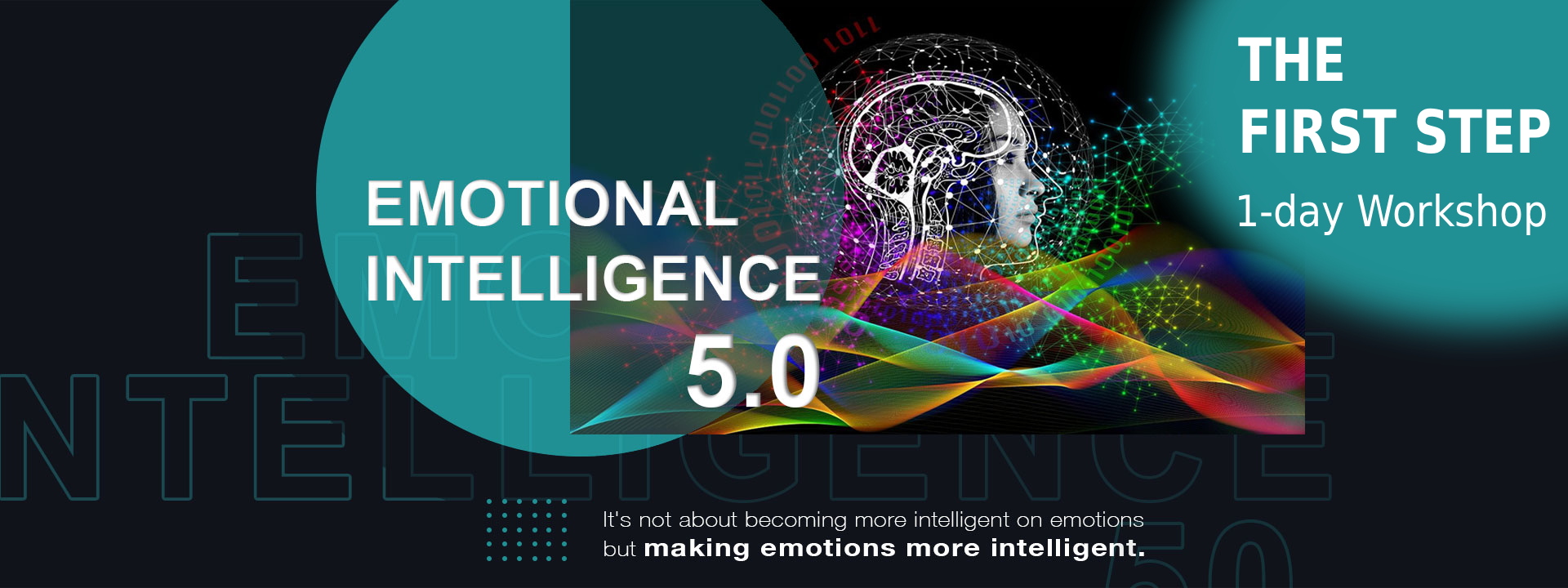
Emotional Intelligence 5.0 - THE FIRST STEP
- 1-day Workshop -
"It is not about becoming more intelligent regarding emotions; it is about making emotions themselves more intelligent."
Specifics
Why a Workshop Rather Than a Course?
The distinction is more than a matter of terminology; it reflects a fundamentally different approach to learning.
The word course often implies a traditional educational model in which knowledge is transferred from an expert to an audience. In such settings, participants are typically expected to absorb, remember, and apply information presented by an authority figure.
The development of emotional intelligence, however, requires a different methodology. Understanding emotions, thoughts, behaviour, and human experience cannot be achieved solely through acquiring information. It requires reflection, dialogue, critical thinking, and the examination of one's own assumptions and experiences.
For this reason, the programme is designed as a workshop rather than a course. The workshop format encourages active participation, open discussion, and the exploration of ideas from multiple perspectives. Rather than relying on authority, it emphasises reasoned argument, shared inquiry, and experiential learning. Participants are invited to contribute their own insights, challenge existing viewpoints, and engage in meaningful dialogue with others.
The objective is not simply to acquire knowledge, but to develop a deeper understanding through collaborative exploration and reflection.
Introduction
Let's be honest with ourselves and call a spade a spade: our understanding of emotional intelligence has reached an impasse. The concept has been stretched, diluted, and contradicted so often that even its linguistic meaning is beginning to dissolve beneath the weight of competing interpretations. What was once a powerful framework risks becoming little more than a fashionable phrase.
Yet the subject is far too important to be abandoned to the erosion of time, the complacency of convention, or the arrogance of intellectual dogma. To recover its true value, we must be willing to revisit its foundations—examining past definitions, assumptions, and orthodoxies with both rigor and humility.
Perhaps the greatest misconception lies in the very name itself. The goal is not to become more intelligent about emotions, but to make emotions themselves more intelligent—to cultivate feelings that are informed by wisdom, disciplined by self-awareness, and aligned with sound judgment.
Emotional intelligence is not the mastery of emotion through reason, nor the surrender of reason to emotion. It is the art of bringing the two into a higher form of cooperation.
These questions—and many others—will be explored throughout the workshop. Together, we will examine the historical, evolutionary, and biological foundations of the human mind's emotional instability, seeking to understand not only how emotions arise, but why they so often shape our lives in ways we neither intend nor fully comprehend.
We will critically examine prevailing models of thought formation, tracing the path from the earliest mental impulses to their eventual expression in attitudes, decisions, and behaviour. Rather than accepting inherited assumptions at face value, we will investigate the mechanisms through which thoughts gain influence and emotions acquire momentum.
Equally important, we will study practical and evidence-based approaches for cultivating greater emotional clarity and self-mastery. Participants will be introduced to a technique that has consistently demonstrated positive outcomes, providing a structured approach to engaging with thoughts and emotions more consciously and effectively.
Most importantly, this intensive journey is designed to help you discover your own patterns of thinking, observe them with greater awareness, and develop the capacity to choose how you relate to them. For true freedom begins not when thoughts disappear, but when you can recognise them, understand them, and consciously decide whether to embrace them—or simply let them pass.
Who Is This Competence-Building Workshop For?
This workshop is for anyone interested in exploring the relationship between emotions and reason: how emotions shape our thinking, and how our thinking can shape our emotions.
It is particularly relevant for:
Teachers, professors, and educators
University students and lifelong learners
Managers, team leaders, and executives
Trainers, coaches, and facilitators
Human resource professionals
Healthcare and wellbeing practitioners
Customer service and hospitality professionals
Anyone seeking to strengthen their emotional intelligence, self-awareness, and interpersonal effectiveness
No prior knowledge of psychology, neuroscience, or emotional intelligence is required. The workshop is suitable for participants from diverse educational, cultural, and professional backgrounds.
Certificate: Certificate of Attendance at the End of the Course
Schedule: Classes take place in the morning. The final schedule is provided no later than 2 weeks before the participants’ arrival. The course provider may make minor last-minute changes to the schedule if necessary.
Duration: 4 hours, with a 15-minute break after each hour.
Equipment: No special equipment is required.
Moderator: Alex N. Mars
Learning outcomes
By the end of this workshop, participants will understand the power of emotions and learn how to use reason to guide, regulate, and ultimately master their influence.
Tentative schedule
First Hour: “What?”
We begin by exploring what emotional intelligence really means. We will look critically at today's common ideas and approaches, discussing why emotional intelligence matters and the different ways people believe it can be developed. The goal is to create a clear and shared understanding before moving forward.
Second Hour: “Why?”
We explore why we think, feel, and react the way we do. We will look at the biological foundations of the human brain and introduce the “Origin of Thought” model.
Participants will discover how the chemistry of the body can influence perception, emotions, decision-making, and behaviour. We will also explore how the evolutionary design of the brain creates both opportunities and limitations—and how understanding these mechanisms can help us gain greater awareness and control over our emotional responses.
Third Hour: “How?”
This hour focuses on practical tools and techniques. Participants will learn how to identify limiting beliefs and unhelpful patterns of thinking.
Through guided exercises, they will practise stepping back and observing their thoughts more objectively, recognising habitual patterns and asking important questions: Is this thought relevant? Is it useful? How does it affect my emotions and behaviour?
Fourth Hour: “Now What?”
In the final hour, we explore how greater emotional awareness and self-observation can change the way we understand past experiences and respond to similar situations in the future.
There will be an open discussion and question session, allowing participants to explore the issues that matter most to them.
Finally, we will bring together the key ideas, lessons, and practical tools from the workshop, focusing on how they can be applied in everyday life, education, and the professional environment.
"To increase people's satisfaction and performance, we need to adjust their external and internal environments. Developing and cultivating emotional intelligence involves creating conditions that fulfil personal aspirations for excellence."