Skills acquisition
Competence-Building Event
ERASMUS+ Mobility Programme
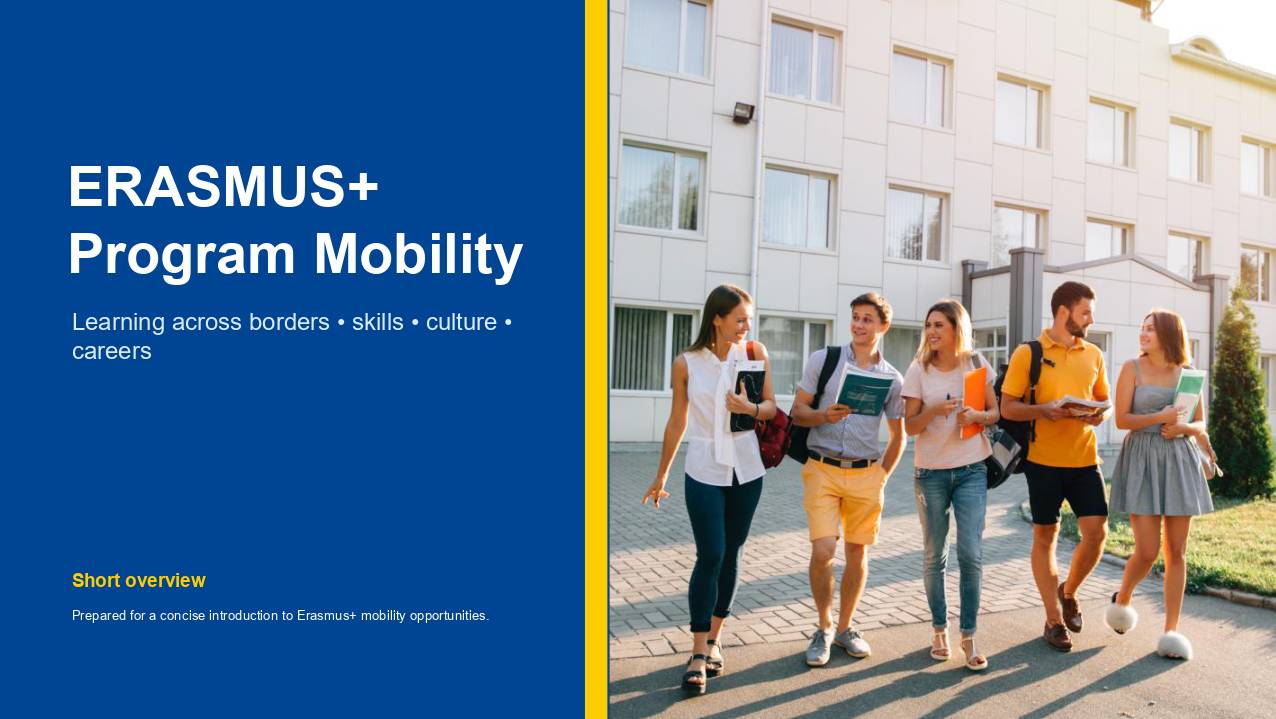
The Erasmus+ Mobility Programme is a European Union initiative that supports learning, training, and professional development through international exchange. It enables participants to gain valuable experience abroad, develop new skills, share knowledge and best practices, and build strong international networks.
By fostering cooperation between organisations across Europe, Erasmus+ promotes innovation, intercultural understanding, and lifelong learning. Mobility activities provide participants with fresh perspectives, practical insights, and opportunities for personal and professional growth, contributing to higher standards and greater competitiveness in their respective fields.

International Learning and Exchange
Professional and Personal Development

Sharing of Best Practices

European Cooperation and Networking
Tailored to unique needs
Each event is meticulously planned with attention to every detail and a commitment to creating a truly memorable experience.
In designing our programmes, we follow established best practices and the guidance of the Erasmus+ Programme Guide, while adding a distinctive Canarian touch. Beyond Tenerife's exceptional climate and welcoming atmosphere, participants gain access to meaningful local connections, authentic cultural encounters, and unique opportunities where ideas, interests, and people come together.
Tenerife offers an inspiring setting for learning and collaboration. Its breathtaking landscapes, rich cultural heritage, vibrant traditions, and diverse attractions provide the perfect backdrop for an experience that extends far beyond the classroom.
Diversity of options demands not only meticulous planning but also the careful alignment of interests, expectations, and practical possibilities to ensure seamless execution.
Below, we present the latest event, its planning and implementation in more detail.
INTRODUCTION
The Erasmus+ mobility programme provides pupils, students, teachers, staff, and other participants with the opportunity to undertake part of their education, training, or professional development in another country. Its primary aim is to enhance knowledge, skills, competencies, intercultural awareness, and European cooperation. Mobility activities are built around clearly defined learning objectives agreed upon by both the sending and host organisations. To ensure meaningful outcomes, each mobility experience must be carefully planned, effectively implemented, and formally recognised upon completion.
Objectives
expose students to different views, knowledge, teaching and research methods as well as work practices in their study field in the European and international context;
develop their transversal skills such as communication skills, language skills, critical thinking, problem solving, intercultural skills and research skills;
develop their forward-looking skills, such as digital and green skills, that will enable them to tackle the challenges of today and tomorrow;
facilitate personal development, such as the ability to adapt to new situations and self-confidence.
The objective is also to enable any staff, including staff from enterprises, to teach or train abroad as part of their professional development to:
share their expertise;
experience new teaching environments;
acquire new innovative pedagogical and curriculum design skills as well as digital skills;
connect with their peers abroad to develop common activities to achieve the programme’s objectives;
exchange good practices and enhance cooperation between higher education institutions;
better prepare students for the world of work.
In addition, the objective is to foster the development of transnational and transdisciplinary curricula as well as innovative ways of learning and teaching, including online collaboration, research-based learning and challenge-based approaches with the objective of tackling societal challenges.
...
The following case study outlines these processes and objectives and demonstrates their practical application through our most recent event:
Planning
- From First Contact to Takeoff --->
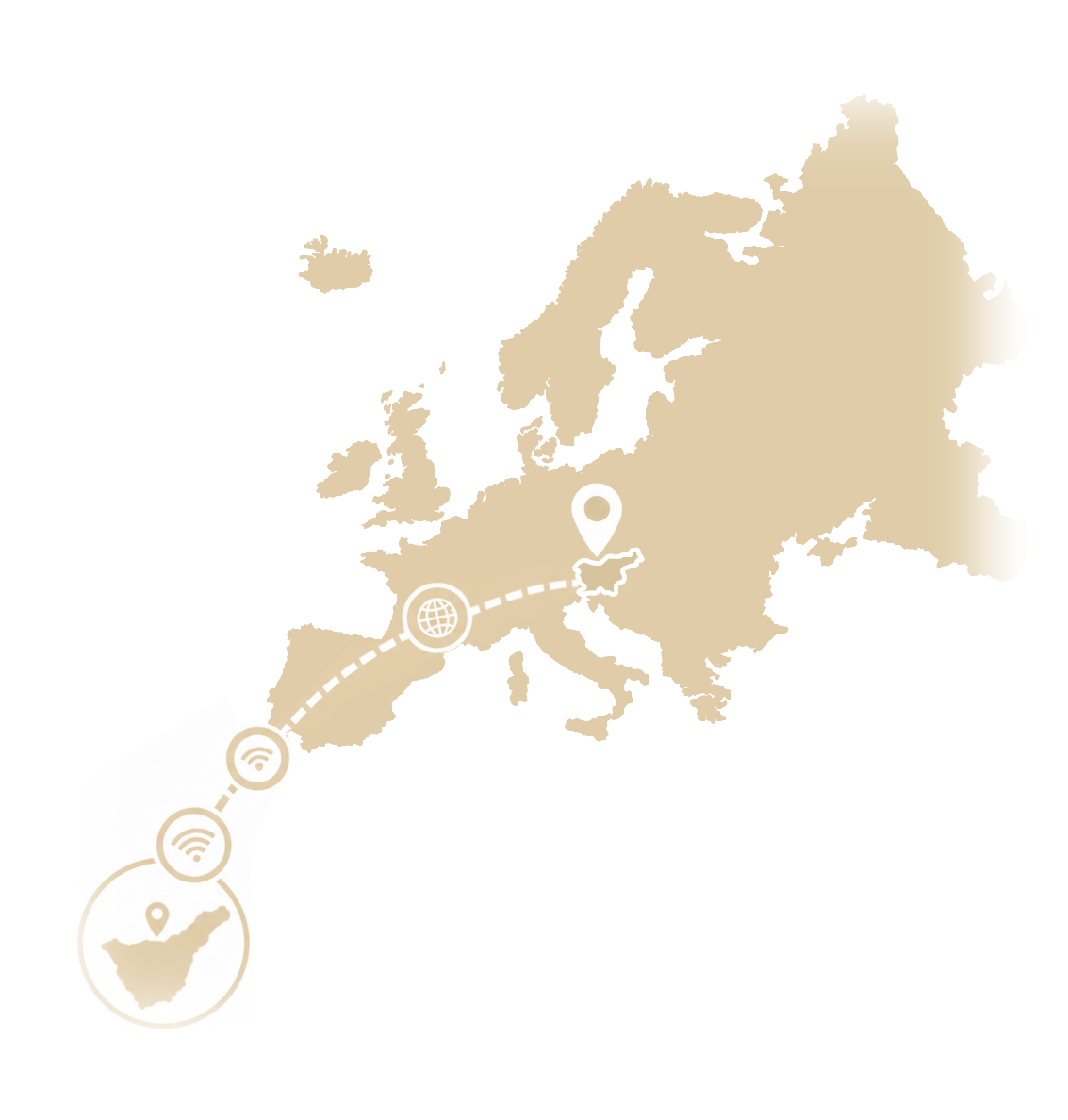
Preparing for a Successful Mobility Experience
The Higher Professional College of the School Centre Velenje, Slovenia, Department of Information Technology, approached us with a request to organise a mobility programme. As a result, our planning focused on the interests and educational objectives of IT students.
We carefully listened to their expectations, presented the opportunities that Tenerife could offer, and contributed several constructive suggestions based on our local knowledge and experience. Through close cooperation and extensive coordination, a programme was developed that balanced educational value, professional relevance, and cultural experience.
Once the programme had been agreed upon and the contract signed, the implementation phase began. From that moment onward, our responsibility was to transform the agreed plan into a well-organised and successful event.
phone calls, emails, online conversations...
Suitable technical, educational, and cultural partners had to be identified, contacted, and confirmed first. These included a technical institute, the university, the Auditorio, a local school, a guest lecturer, and a computer company relevant to the programme.
The planning process also involved overcoming several challenges. Access to the technical institute required advanced coordination and the submission of participants' passport details. Arranging visits to the university and the Auditorio involved extensive communication, with schedules needing to be adjusted several times as plans evolved. Finding a suitable computer company proved particularly demanding, as it needed to be both professionally relevant and willing to host a group of students.
Additional preparations included visits to the university and the local school to finalise hosting arrangements, coordination of lecture content with the guest lecturer, selection of a recommended local surf school, adaptation of the programme following a hotel change, organisation of transport, and coordination of catering and meal arrangements.
Much of this work remained invisible to the participants, but it was essential in ensuring that, from the moment the plane landed, every aspect of the event could proceed as planned.
Execution
---> From Arrival to Departure --->
Delivering the Mobility Experience
The successful implementation of the agreed programme requires careful coordination and dedicated oversight. Guided by the principles of safety, reliability, and responsibility, we ensure that every activity is delivered to the highest standard.
The Day Before
The students arrived at Tenerife South Airport the day before the programme officially started. They were welcomed and picked up at the airport, because after travelling such a long distance, it is important to feel that someone is waiting for you and will take care of you. This is the feeling we want to give to all our participants from the very first moment.
Day 1 – Innovation, Technology and Digital Industry
On Monday morning, we met at 9:00 at the hotel reception. A few days before arrival, the students had already received a description of the full 5-day mobility programme, so they knew what to expect each day.
At 9:15, we left for ITER, the Institute of Technology and Renewable Energy. Because traffic in Tenerife can be unpredictable, we had planned extra time for the journey. In reality, we arrived earlier than expected, at 9:30. The guide kindly adapted to the situation and started the visit earlier, just for our group.
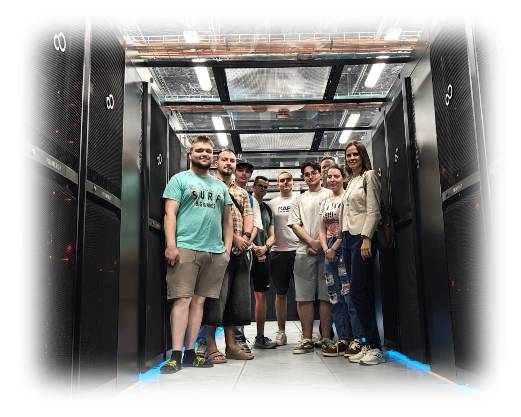
The presentation at ITER was interesting, funny, and highly educational. Since the participants were IT students, one of the most exciting parts was seeing the supercomputer and the highly protected facilities where it is kept. Entry was strictly controlled: no passport, no entry.
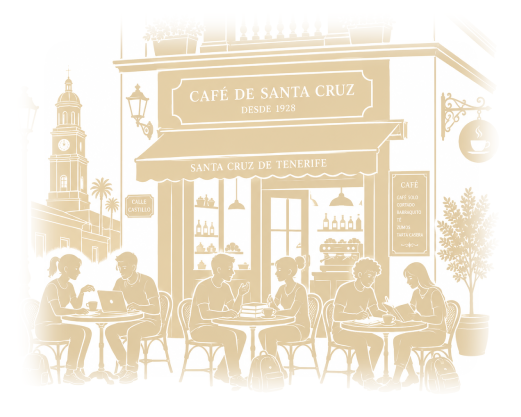
As the visit also finished earlier than planned, we had extra time before the next activity in Santa Cruz. Instead of rushing, we took a relaxed stop at a roadside restaurant, where students could have coffee and refreshments.
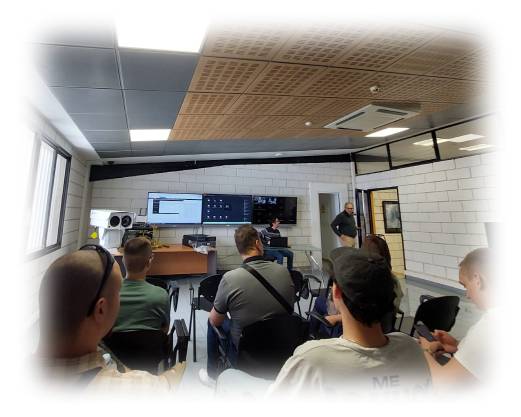
The next visit took place at a technology company, Contel-Ingenieros, from Santa Cruz. Employing around 40 specialists, the company provides solutions in hotel installations, software development, telecommunications, and digital systems. The students were welcomed by the owner, Mr José Luis Delgado Sánchez, who delivered a presentation on the operation of supervision and digital control systems in modern “smart” hotels, offering valuable insight into the technologies shaping today's hospitality industry.
We can never thank him enough for the hospitality he showed us.
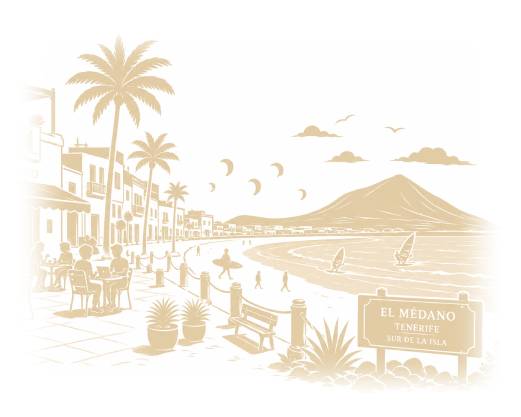
We finished our visit around 15:00 and headed south of the island. Since we were all hungry, we voted to stop and refresh in El Médano, a famous surfing destination and host of international windsurfing championships. We returned to the hotel around 18:00 so that the participants could relax and explore the local events on the island on their own.
Day 2 – Higher Education, Innovation and Architecture
The second day went even more smoothly.
We met at 9:00 and travelled to the University of La Laguna. The journey also showed the students one of Tenerife’s unique features: the climate difference between the warm south and the cooler city of La Laguna. With more than 30 microclimates on the island, the students were not fully prepared for the temperature change.
At the University of La Laguna, we were welcomed by Professor Jonay Toledo, who is responsible for Erasmus coordination at ULL. He showed us around the university and made it possible for the students to attend a live robotics presentation by a student preparing his master’s degree.
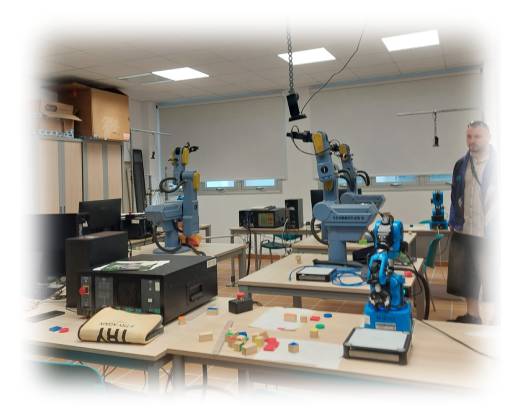
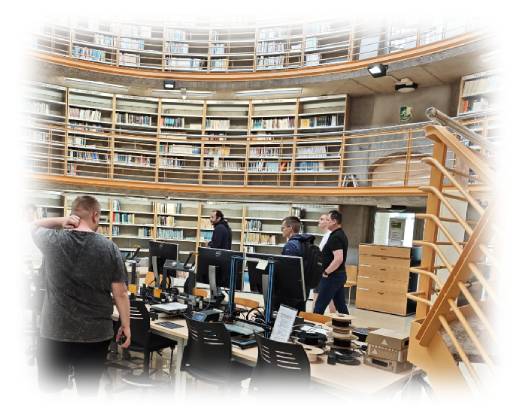
It was also interesting to see how the university had transformed a traditional library into a lively study space where students can work together, communicate, and exchange ideas.
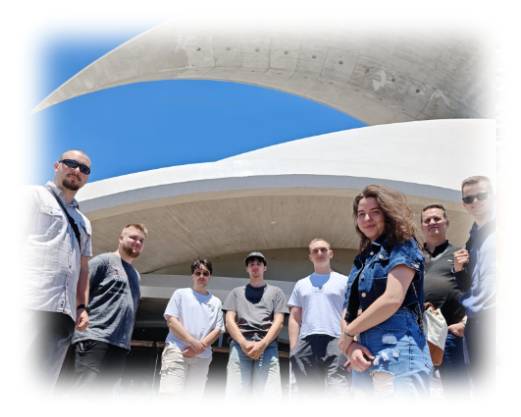
At 12:30, we continued with a short visit to the historic centre of La Laguna, a UNESCO-listed city. We then travelled to Santa Cruz, where at 14:00 we had a guided visit to the iconic Auditorio de Tenerife.
Day 3 – IT Education, Peer Exchange and Cultural Discovery
The students’ hotel was very close to the school, so we arrived on time, exactly at 10:00.
At CIFP Adeje, we received a very warm welcome from the Erasmus coordinator, the principal, and the English teacher. First, we were taken to the breakfast dining room, where hospitality students served us breakfast in English. This was a wonderful way to welcome visitors, but also a practical learning opportunity for the local students, who could practise serving, communicating, and presenting themselves in English.
After breakfast, we were shown around the school. CIFP Adeje is a modern school with excellent facilities. Both teachers and students had the opportunity to exchange ideas and experiences.
The visiting IT students were paired with Spanish students from a similar educational level. This became one of the most valuable moments of the mobility. The exchange was not only about school subjects, but also about daily life, free time, and student experiences.
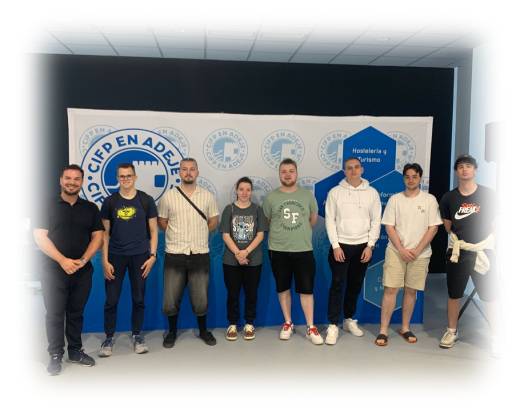
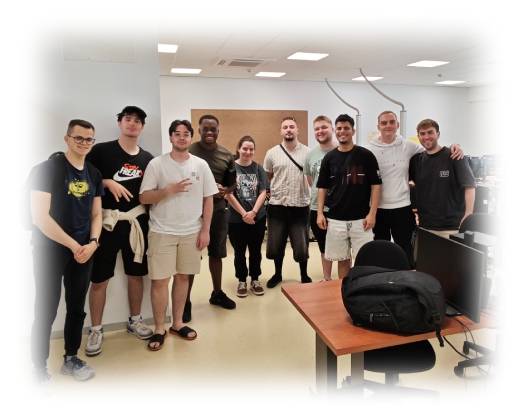
The connection continued outside the official programme, as some students arranged to meet again later in the week.
After saying goodbye to this welcoming school, we continued north on the island.
The north of Tenerife has a very different atmosphere from the south, and we wanted the students to experience both sides of the island.
The program included learning about local culture, which is extremely rich in the north of the island. Cultural visits may not always be the first choice for IT students, but they create memories and help participants understand the local environment.
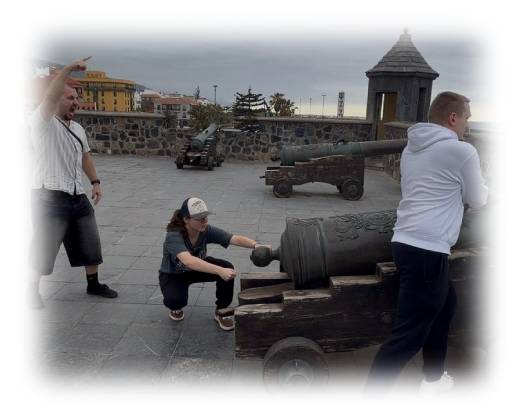
During the afternoon, we added some small changes to the programme. We visited the Gofio Museum, saw the large traditional carpet being prepared in front of the town hall using coloured volcanic sand, and made several short stops before continuing to Puerto de la Cruz, one of the most visited towns in northern Tenerife.
We returned to the hotel at almost 21:00. It was a long day, but full of valuable experiences.
Day 4 – Psychology, User Experience and Hotel Technology
The fourth day also followed the programme almost completely.
The students were picked up at 9:45 and driven to a luxury hotel in La Caleta.
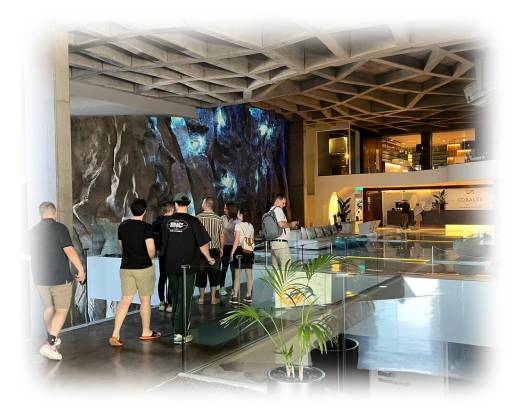
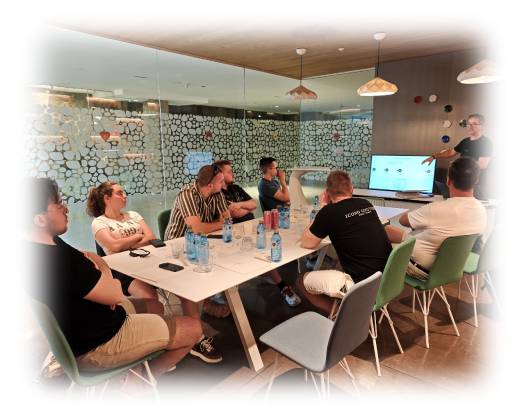
There, we attended an interactive lecture that challenged them to think in new ways. They learned about how the brain works, how people make decisions, what triggers human behaviour, and why psychology is important for IT professionals, especially in user experience and digital design.
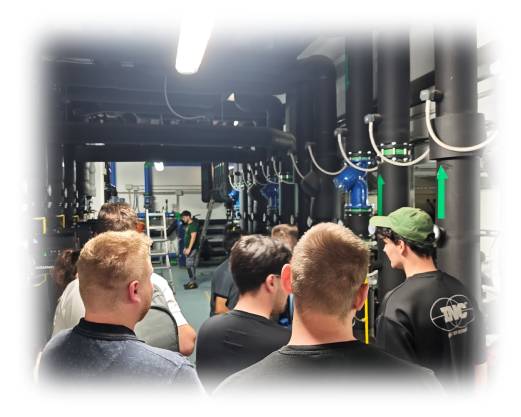
After the session, the students were guided by a hotel technician through the technical areas of the hotel. They saw the “lungs” of the hotel: the machines, systems, and technical infrastructure that guests usually never see. This helped them understand that luxury is not only what appears on the surface, but also everything that works behind the scenes.
Day 5 – Teamwork, Wellbeing and Natural Heritage
The final day included a small organisational challenge, which became another example of real-life adaptation.
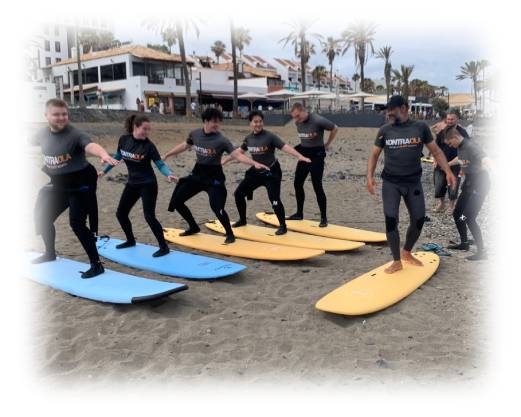
The students were picked up at 9:30 for their surfing lesson that should start at 10:00. At that moment, we realised that the hotel required them to check out by 11:00. Since the students would still be at the surfing activity at that time, we had to reorganise the morning quickly. This caused a delay of almost 30 minutes for the surfing lesson, and the session could not be extended because another group was scheduled afterwards.
Nevertheless, the surf school reacted very efficiently. As soon as we arrived, they shortened the theoretical introduction and moved quickly to the practical part on the shore. The planned time at sea was still met, and most students managed to ride the waves, an enviable success.
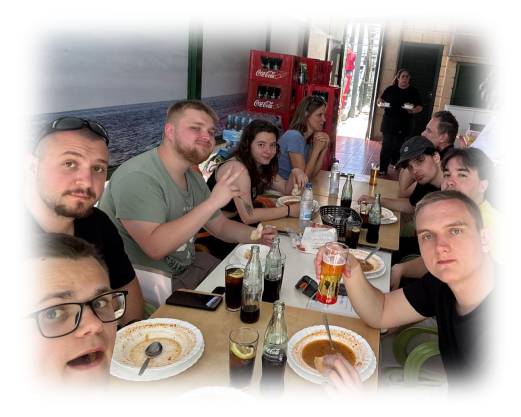
After surfing, we returned to the hotel to pick up the luggage and went for lunch in a local restaurant. We decided to eat first because later in the day, the drive and visits would make it harder to stop.
After lunch, we drove to Teide National Park to learn about Tenerife's geology, stopping at several viewpoints along the way for breathtaking photo opportunities.
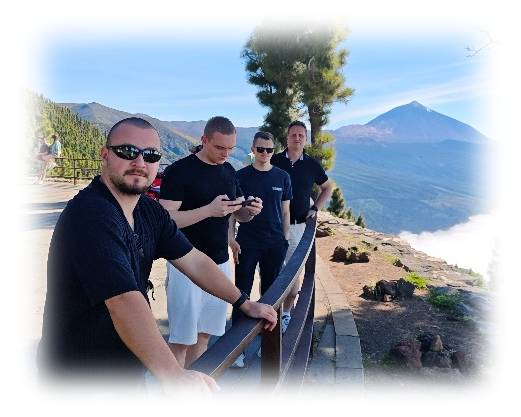
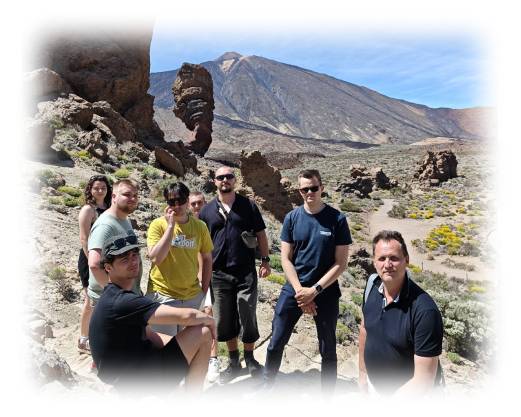
We took the southern road to Teide and then continued towards Santa Cruz.
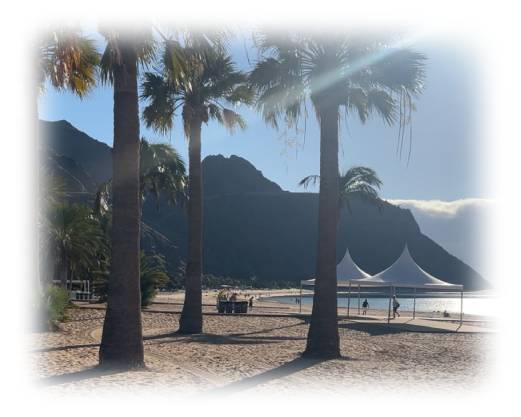
On the way back, we visited Las Teresitas, one of the most famous beaches in Tenerife. It was very windy, but some of the more courageous students still went swimming one last time before leaving the island.
Later that day, we arranged the group’s transfer to another hotel in the centre of Santa Cruz, as their return flight from Tenerife North Airport was scheduled for early the following morning.
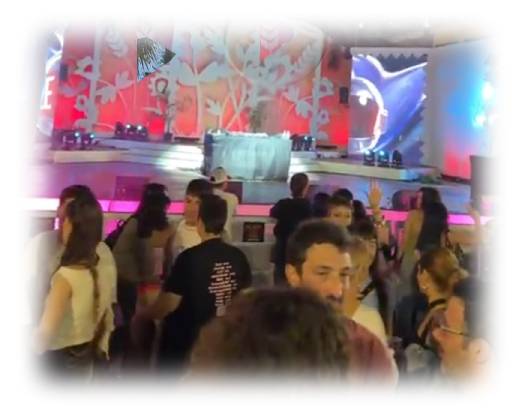
This also allowed them to enjoy the vibrant atmosphere of the capital, with live concerts and thousands of people celebrating music in the streets.
We remained in contact until the end, making sure everyone arrived at the airport on time and bringing a successful mobility experience to a smooth close.
This is how our active, educational, and very real Erasmus+ mobility experience came to an end: shaped by technology, learning, culture, teamwork, flexibility, and countless moments that could never have been fully planned. We always leave room for the unexpected, because some of the most valuable experiences arise from surprises that no programme can anticipate.
In the end, it is often these unplanned moments that leave the strongest impressions, enrich the learning process, and transform a well-organised mobility project into a truly memorable experience.
ThankS
to students and mentor
Thank you for your exemplary conduct throughout the programme under the leadership of your dedicated principal, Mr Uros. Your commitment, discipline, and engagement were of the highest standard, and we are deeply grateful that the entire event proceeded smoothly and without a single incident.
We sincerely hope that the friendships you have built and strengthened during this unforgettable experience will continue to grow long after your return home. May the knowledge gained, the memories created, and the connections formed serve as a source of inspiration in the years ahead.
With our warmest regards and best wishes for your future,
to colleagues and partners
This mobility programme would not have been possible without the people and organisations who welcomed our students and shared their time, knowledge, and experience.
Our sincere thanks to Irene from ITER for making complex technical topics engaging and accessible, and to José Luis from Contel for introducing us to the company and its innovative work.
We are especially grateful to Professor Jonay from ULL for showing our students university life in Tenerife and demonstrating his own inventions.
We also thank Nadia from Auditorio de Tenerife for the guided tour of this iconic building.
Warm thanks to Eduardo, Principal of CIFP Adeje, and Eduardo, Erasmus+ Coordinator at CIFP Adeje, for their kind welcome.
Special thanks to Alex for leading an inspiring course on how the human brain works.
Finally, thank you to the surf school Kontraola for organising such enjoyable lessons.
Thank you all for helping make this Erasmus+ mobility a memorable success.
"Build Skills, Create Opportunities"